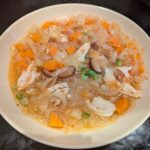
Chicken Vegetable Noodle Soup with Kimchi
A simple warming soup with lots of flavor
Yield: 4 bowls
Materials
- 1 liter chicken broth
- 1 medium carrot 100g
- 1 medium-small onion 55g
- 160 g cabbage or approximately 2 cups/500ml chopped or shredded
- 2 dried shiitake mushrooms
- 200 ml boiling water to soak mushrooms (a scant cup)
- 2-3 slices fresh ginger peeled and sliced maybe 1-2mm thick
- 2 cloves garlic chopped
- 125 ml sour aged kimchi sliced (or ½ cup)
- 2-3 inches dried kombu kelp around 5-8cm length
- 1 tablespoon neutral oil of choice
- 1 teaspoon gochugaru flakes optional
- 0.25 teaspoon ground white pepper
- salt to taste
- 200 g dry noodles of choice cooked by package directions (around ½ lb. dry)
For Serving
- cooked chicken
- sliced green onion optional
- drizzle toasted sesame oil optional
- drizzle Chinese chili oil optional
- more kimchi
Instructions
- Soak the dried shiitake mushrooms in a small bowl or mug of boiling water for at least 30 minutes while you do other prep. Place them stem down, and I like to weigh them down in the water with a spoon resting on top.(When those are fully rehydrated, gently squeeze them out, reserving the soaking water to add to the soup broth. Slice the tough stem off the squeezed mushrooms, and slice the caps to add to the soup with the other vegetables.)
Prepare/Assemble Your Ingredients
- Cut all your fresh vegetables, as you prefer. We're keeping it simple here, and this is how I did it for this batch of soup.
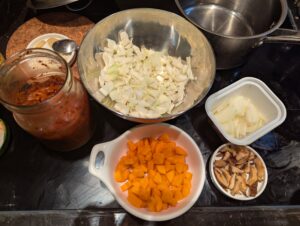
- Get your kimchi ready.Tonight I'm using a relatively small amount from a homemade batch of aged shredded white cabbage kimchi--more as a seasoning component than anything else. If you want your soup to be more about the kimchi, cut back on the fresh cabbage and added salt, and use a higher proportion of kimchi.
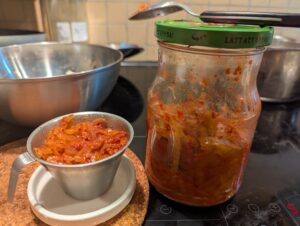
Prepare Your Soup Base
- Tonight I'm using these basic components for flavor.
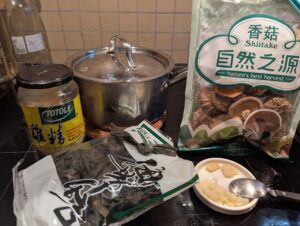
- Heat the oil over medium heat in a pan, and add the sliced ginger. Fry a little until it starts getting fragrant, then add the chopped garlic and sliced onion. Continue frying, stirring, for another minute or so until the garlic is also fragrant. We're not looking to brown anything, just bring out some of the flavor..
- Add the chicken broth into the pot, add in the reserved mushroom soaking liquid, and bring to the boil.Here, I used half fresh rich chicken broth from the previous post, and made up the other half with water plus a couple of teaspoons of the Chinese chicken broth powder shown above. It's less nutritious than using all homemade, but either way is delicious.
- Once the soup broth is boiling, add in your kombu and vegetables, including the kimchi. I purposely cut everything to need close to the same cooking time, so I just dumped it all in together.
- Also add the pepper and optional gochugaru.This is the same bag of flake type with a sort of medium heat level that was used in this kimchi. It's been staying in the freezer inside a zip bag for freshness. Here, I'm just using a little for the extra flavor and color. Use however much you like, or another type of red pepper entirely.
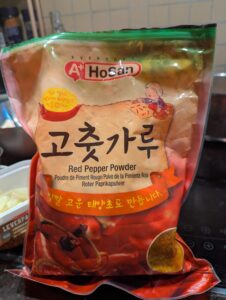
- Simmer covered for 10 minutes, then check for seasoning and doneness. I added some salt and a little more kimchi, and gave it another 5 minutes to simmer for a total of 15. For this type of soup, I prefer the veggies more on the tender side but not totally soft. It's up to you.
Noodle Time!
- Tonight I opted for bean thread noodles, cooked by the serving. They're quick cooking, come in handy single-serving nests, and work well with a lighter type soup broth like this. (The ones on the right labeled "Glass Noodles" in translation appear to be mixed pea and mung bean starch.)If we'd had more rice vermicelli today, I might have chosen those. Feel free to use whatever type of noodles you prefer.
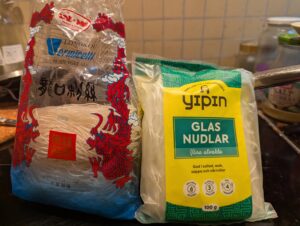
- Easy peasy! These only need to boil for 3 minutes, then it's time to drain and assemble the first bowl.
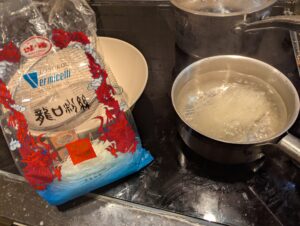
- The easiest way to do this is to drain the noodles at the sink in a mesh strainer, optionally prewarming your soup bowl with the hot noodle water then pouring it out.Then, just transfer your fresh hot noodles into the bowl. The noodle pan and strainer should be ready for the next bowl. It's faster with a hot kettle ready.
- First step: Protein!This is leftover breast meat from the roast chicken that helped make the broth. It's fine to put that in cold from the refrigerator, because the hot noodles and scalding broth will heat it right up.This bowl also got a handful of sliced green onions early, because the only ones we had were frozen. It'll be good, and it's significantly better than no green onion!
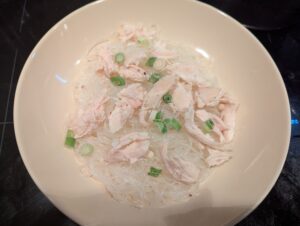
- Ladle on some soup, and you're ready to go!This is with a drizzle of sesame oil, but before Mr. Sweden added his chili oil on top. No extra kimchi for him, because he doesn't particularly enjoy it fresh.This soup broth turned out lighter in color than I expected, and the kimchi cabbage visually blended in more than I would have thought with the other cabbage. The end result was still moderately hot, with a nice hint of tartness and fermented flavor underneath.

- Enjoy!
Notes
This would also be delicious as a vegetarian/vegan soup. Just substitute your preferred vegetable broth, and top with some tofu and/or egg. I would probably use a seasoned fried variation like this, if I could readily get them here. That's some good stuff.