
Creamy Sausage and Sauerkraut Soup
This warm and hearty gluten free soup delivers a lot of flavor from simple ingredients. Perfect for cold weather.
Yield: 6 servings
Materials
- 250 g precooked smoked sausage of your choice (8 oz.) sliced
- 1 tbsp neutral oil of choice, or butter (optional) for browning the sausage and onion if needed
Vegetables
- 1 medium onion chopped
- 1-3 medium carrots sliced
- 4 medium firm boiling potatoes (or equivalent) cut bite-sized
- 450 g sauerkraut (16 oz., or 1 can) drained, with liquid reserved
Other major ingredients
- 1¼ liter water (5 cups)
- 250 ml sour cream/crème fraiche/gräddfil (1 cup) full fat is best
- 1 tbsp potato starch can substitute corn or another starch; use 2 tsp if you want the soup less thick
Seasonings
- ¼ tsp caraway seed
- 1.5 vegetable bouillon cubes enough to make 750ml/3 cups total
- 1 large bay leaf
- coarsely ground pepper to taste
- ½ tsp garlic powder or use fresh
- 1 tbsp fresh or frozen dill chopped
- salt to taste
- sugar small amount to taste, if the sauerkraut is extremely tart
- sprinkles of chopped dill or parsley, and pepper to garnish the top
Instructions
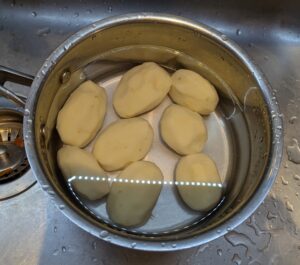
- Peel the potatoes if you prefer, and chop them into bite-sized pieces. Hold to the side, covered with cool water. We had rather small potatoes today, so I used 8 of those.
- Peel and slice carrots, and chop the onion. Hold to the side separately.
- Slice the sausage into bite-sized pieces. These were a thin version of a Swedish take on soft Polish kabanosy. Kielbasa or pretty much any other smoked sausage you prefer should be good.

- NOTE: This next part is best done in a fairly heavy-bottomed pot that you're planning to cook the soup in. I did this differently because I initially misjudged the size of pot this soup would need. I had hoped to simmer it all together in the potato pot shown above. For this size of batch, you will want at least 3 L/quarts of cooking capacity with room to stir. 4L would be better. Soups and stews do have such a talent for outgrowing their pans!
- Fry the sausage over medium heat, stirring occasionally, until it's starting to brown. (Add the little oil or butter to keep things from sticking if your sausage is leaner.) Then add the onions.

- Continue frying it around for a few minutes until the onion just starts picking up a little color around the edges. We aren't looking to cook it soft or deeply brown the sausage, just work up a little extra flavor.

- When that's looking about ready, add in the caraway seeds and fry them around too for another minute or so. If you want to use fresh minced garlic, this is the time to add that too.
- When that's ready, combine the sausage mixture in your soup pot with the potatoes, carrots, and water. Add in the bouillon, bay leaf, and pepper.Bring to a boil, then turn down the heat to simmer it covered for 20 minutes or until the potato and carrot is just fork tender.

- When the root vegetables are cooked, it's time to add in the sauerkraut and garlic powder. The veggies are unlikely to get much softer once the kraut acidity goes in.

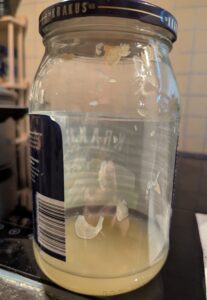
- The original recipe I was working off specified to add the kraut undrained. This is up to your taste and the kraut you're using. I would suggest draining off most of the liquid and keeping it to add to taste later if you want it.The half a big jar I had to use up was sour enough that I just forked the cabbage out of the brine, and sort of wished I had drained it better. So, this remaining brine went back in the fridge.
- Bring back to the boil, and simmer covered for another 15-20 minutes, or until it's wilted down and softened to your taste. Turn down to the lowest heat.

- Place the sour cream in a heatproof container, and stir in the starch. Mix together until very smooth. Note: Potato starch will hold up better to the kraut acidity than corn. Tapioca starch is also good for that.This step is partly intended to help keep the cream from curdling or "splitting" in the hot soup. It's probably unnecessary with the 32% crème fraiche I was using, which can boil--but it will also serve to thicken the soup a little more.

- Dip out some of the hot broth, and gradually stir about a cup/250ml into the sour cream mixture to temper it.This is also intended to keep the cream from curdling, besides the starch glumping up together when it hits the hot broth.

- Our runny tempered sour cream mixture is ready to go into the soup! It should look very smooth.
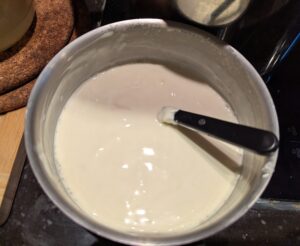
- Carefully stir this through the soup. Since we used potato starch here, it thickened the soup as soon as it was mixed in. If you're using another starch or your soup has cooled down more, you may need to gently heat it some more before it will fully thicken.
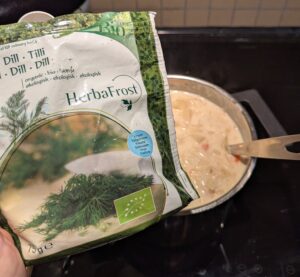
- Adjust seasoning to your taste. This batch turned out just sour enough from that particular kraut that I needed to add around a teaspoon of sugar to help balance the flavors just a tad. The simmering and creaminess were not quite enough to mellow the edge off it. With less aggressively sauerkraut, this addition shouldn't be necessary.Add the dill. Stir in well, then let the soup sit off the heat for 5-10 minutes to let al the flavors blend.l
- Soups's on! This would be good served with some crusty bread, and maybe a green salad. But, it felt like enough of a meal on its own that we just ate big bowls for supper.